



The 10 Rorschach Inkblot Cards Explained
Hermann Rorschach tested hundreds of inkblots before settling on ten. They are always shown in the same order, and each has a distinct character — some are easy to organise, some are awkward, and three bring in colour at precisely the point where the test gets harder. Here is what each card is and what it tends to pull from people.
The structure of the set
- Achromatic (black and grey): Cards I, IV, V, VI and VII.
- Black with red: Cards II and III.
- Fully chromatic (multi-colour): Cards VIII, IX and X.
The order is deliberate. Card I is a gentle start with an obvious "popular" answer. Red appears on II and III, then disappears for four grey cards, then the last three are a burst of colour. One classic Rorschach index — the affective ratio — simply compares how many responses you give to the three coloured cards versus the first seven.
Card by card
-
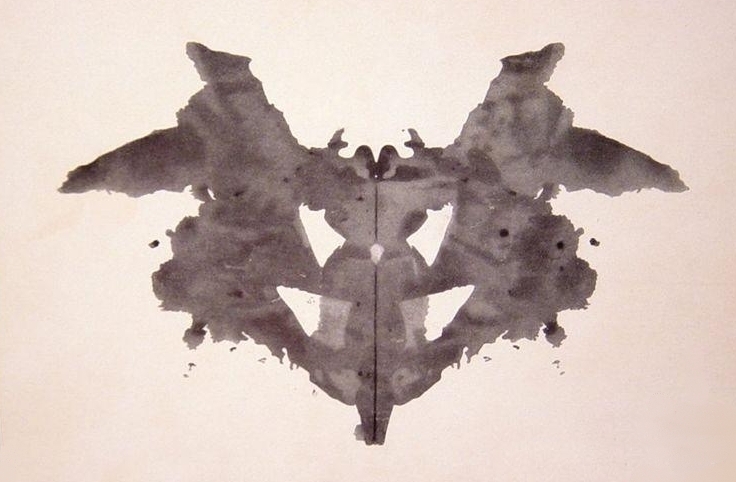
Card I — black and grey
The opening card. It is compact, easy to take in as a whole, and most people find a familiar shape quickly. Because it comes first, it also shows how someone approaches a brand-new ambiguous task.
Common responses
A bat, a butterfly or a moth, using the whole blot.
-
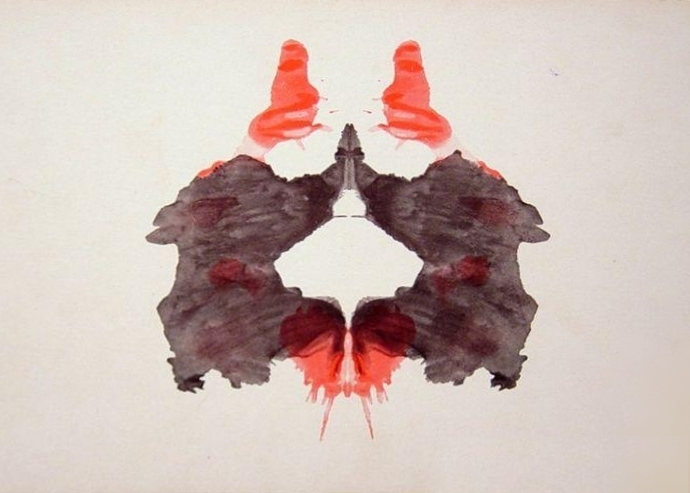
Card II — black with red
The first appearance of colour. The red patches are hard to ignore, and the central white space is often used too. How a person handles the red — incorporating it, avoiding it, or reacting to it — is of interest.
Common responses
Two animals (often bears or dogs) touching, with the red sometimes read as blood or fire.
-
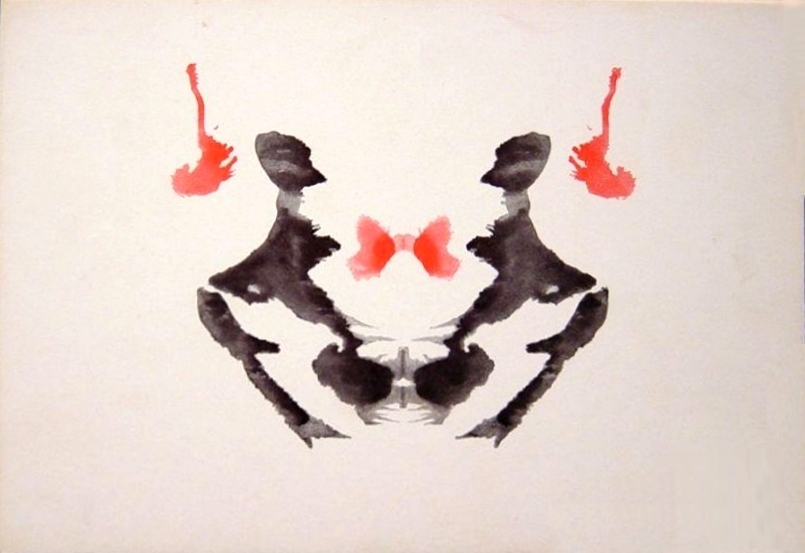
Card III — black with red
Probably the most "social" card: the two large side areas strongly suggest figures, and the question is whether they are seen as people, what they are doing, and whether they are doing it together.
Common responses
Two human figures bending toward each other, often doing something with an object between them.
-
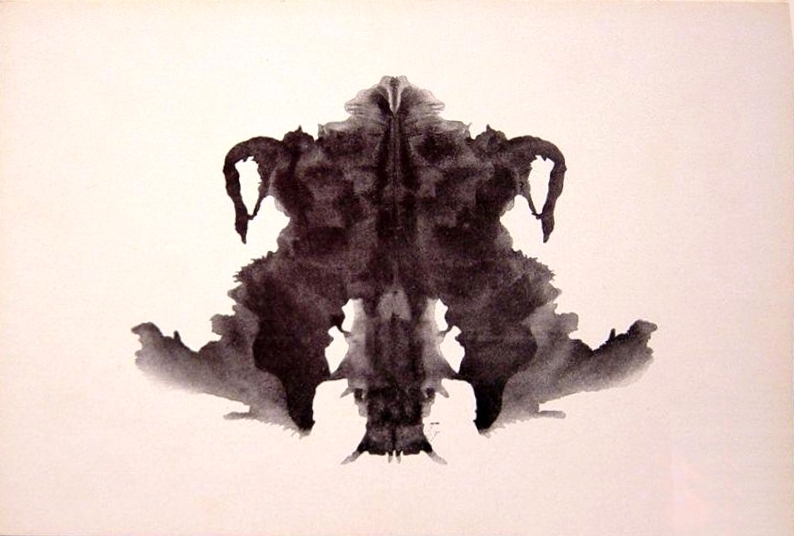
Card IV — black and grey, heavily shaded
Big, dark and dense. The shading is pronounced, which is why texture ("furry", "like a rug") and dimensionality ("looming", "seen from below") show up here more than anywhere else.
Common responses
A large figure, giant or monster, or an animal skin / fur rug.
-
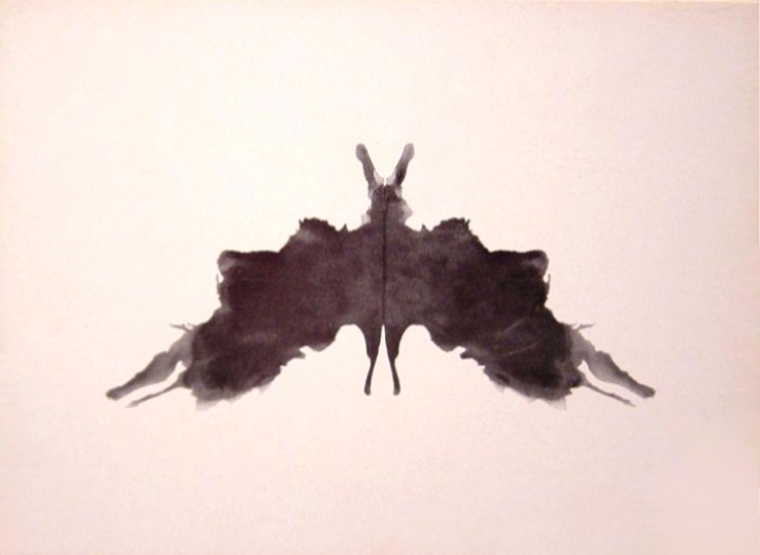
Card V — black
The easiest card in the set and a kind of reset after IV. Its outline fits one answer so well that giving something unusual here is more notable than on any other card.
Common responses
A bat or a butterfly, using the whole blot.
-
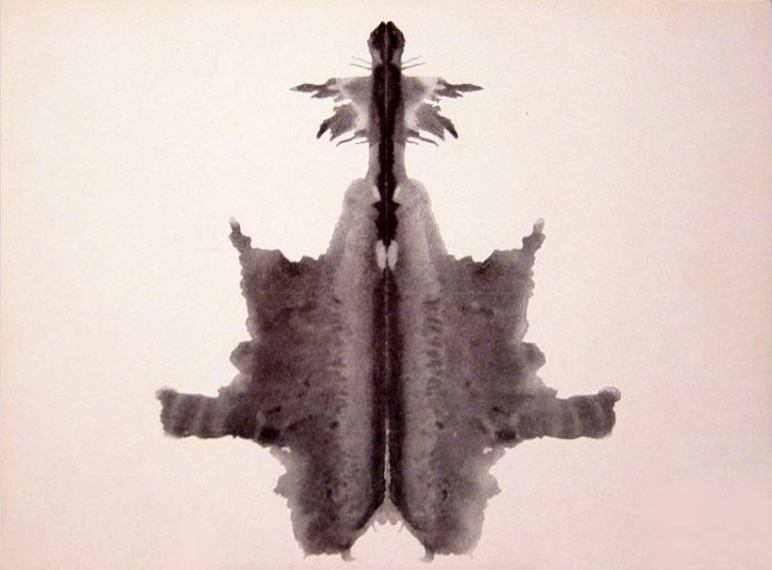
Card VI — black and grey, textured
Known for its shading and for being the card people most often find hard to say anything about. Like IV, it draws texture responses; the upper detail is frequently singled out on its own.
Common responses
An animal skin, hide or rug.
-
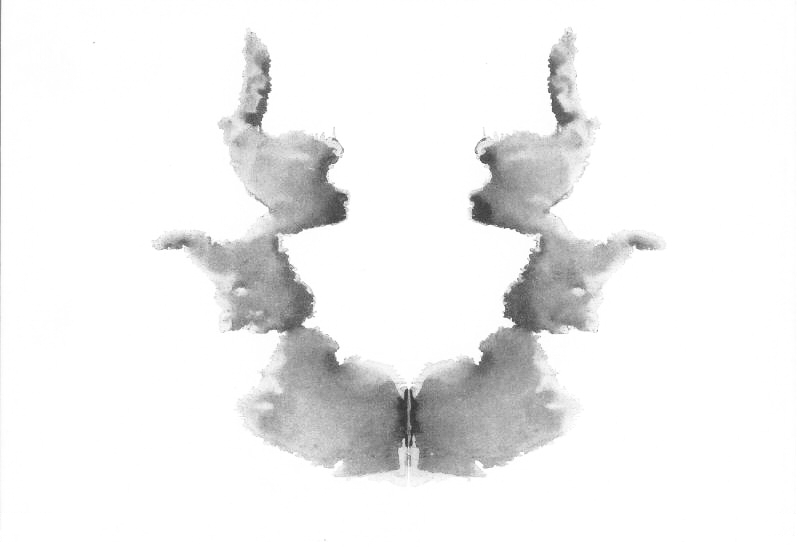
Card VII — light grey
Lighter and airier than the previous three, with a large open white area at the centre. It tends to be seen as two figures facing each other.
Common responses
Two women, girls or children looking at each other; sometimes two faces or heads.
-
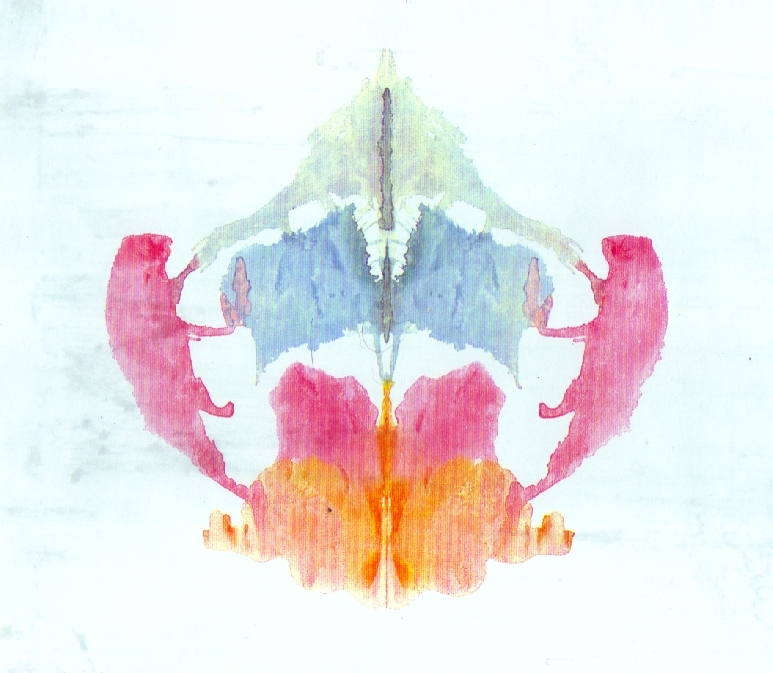
Card VIII — multicolour
The first fully coloured card, and usually a relief after the grey run: it is well-organised and the side areas suggest a very common answer. It shows how a person uses colour when it is easy to use.
Common responses
A four-legged animal on each side, climbing or walking.
-
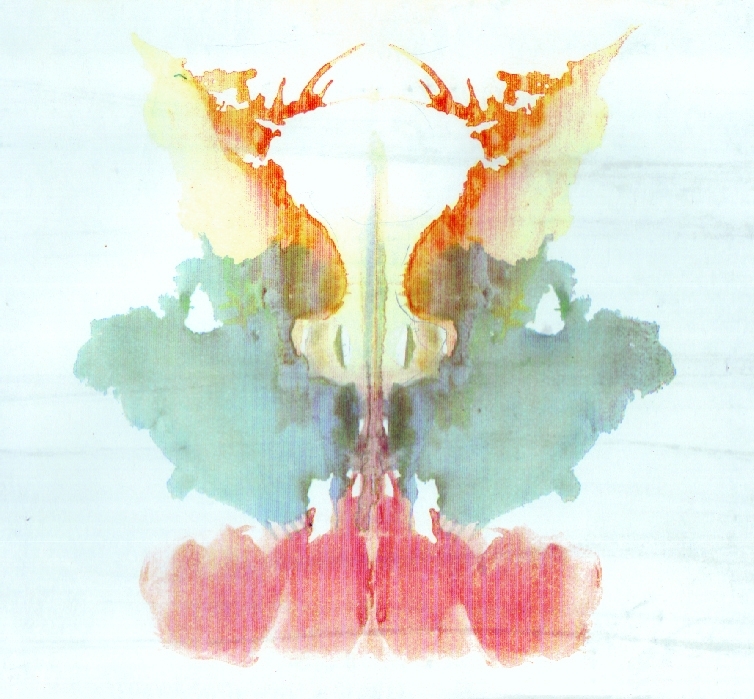
Card IX — multicolour, diffuse
The hardest card for most people. The colours blend into each other, the forms are vague, and there is no single widely shared answer. Vague or whole-blot responses are common, as is simply running out of ideas.
Common responses
Human or human-like figures in the orange areas; otherwise highly varied.
-
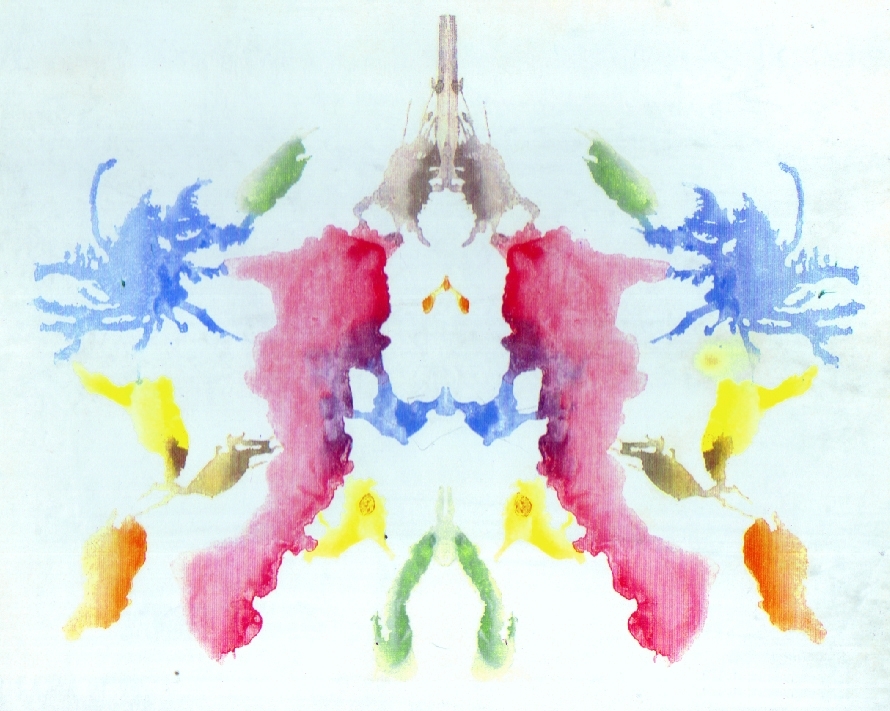
Card X — multicolour, fragmented
Many separate coloured shapes rather than one mass. Organising it into a single whole takes effort, so most people give several detail responses instead — which makes it a good test of how someone handles a lot of competing elements at once.
Common responses
A crab, spider or similar creature in the blue areas, plus assorted animals in the other details.
Why "popular" responses matter
In Exner's Comprehensive System, a response is coded Popular when it matches an answer given by at least a third of a large reference sample for that exact area of that card. Most adults give around four to seven populars across the ten cards. Far fewer suggests an unusual way of seeing; far more can suggest a very conventional, cautious approach. It is one of about two dozen variables that make up the structural summary — see how Rorschach scoring works for the rest.